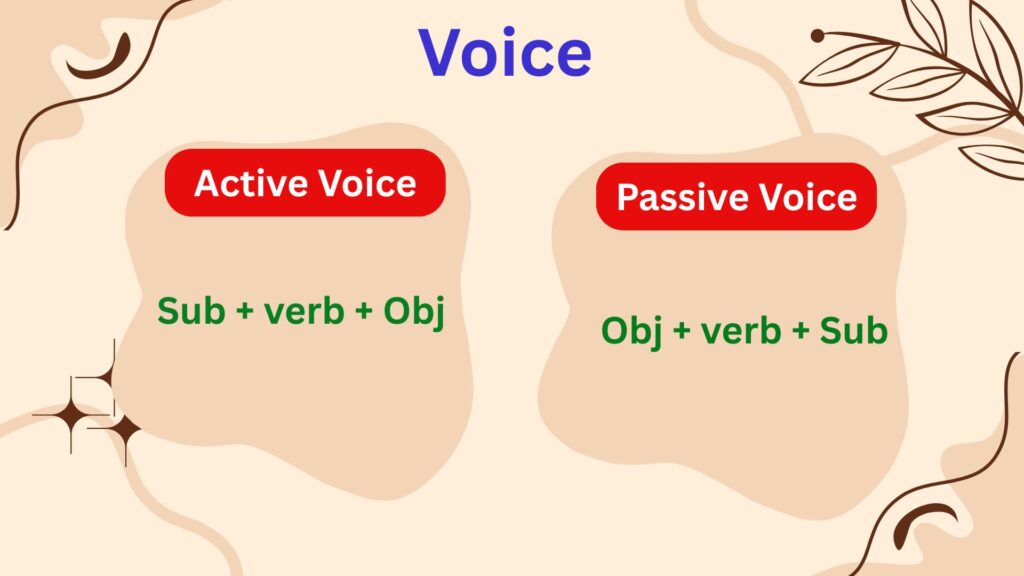
Active and passive voice are essential for all students who is learning English grammar. Learn the active and passive voice with clear examples, conversion rules, and practice exercises to master English grammar.
A key aspect of effective writing is the use of clear, direct language. Using active voice in most cases provides the best results, but occasionally passive construction is better for a particular purpose. Whether you’re writing a research report for a class or an article for the public, it’s important to understand how to use each style correctly.
What is Active Voice
In the active voice, the subject performs the action expressed by the verb. In the passive voice, an object is acted upon.
APA style encourages the use of the active voice, as it clarifies who performs an action in your sentence. The key to converting your sentences to the active voice is to identify the noun performing the verb and make it the subject when you rewrite your sentence.
What is Passive Voice?
Passive voice is a type of grammar that uses forms of the verb to be and past participles. These sentences often end with a preposition like by.
While many writing instructors frown on the use of passive voice, it’s not a grammatical error.
When to Use Active Voice or Passive Voice?
Writing in active voice makes your sentences clearer and concise. But sometimes the passive voice can be helpful.
In the passive voice, the subject of a sentence is acted upon by some other grammatical object such as a form of to be (is, was, has been), a past participle of a verb, or a prepositional phrase like by or for. Passive sentences are often criticized for sounding evasive and obscuring the performer of an action, but there are many situations where it can help a writer achieve his or her purpose.
One common example is when a person is seeking to avoid using personal pronouns in a conversation about a sensitive topic, such as a sexual assault. In these cases, it may be more appropriate to write in the passive voice: “It was reported that a sexual assault occurred.”
Other examples include when the performer of an action is known but should not receive more emphasis than the action itself. This occurs frequently in news writing, where it is typical to see phrases such as, “A rock shattered the store’s window,” or, “The children were dropped off at the corner by the bus driver.”
In these cases, the passive voice allows the reporter to focus on the facts of the incident without worrying about who did what to whom and why. It also saves space on the page and, in some instances, a shortening of word count is necessary due to limited print size.
Conversion Rules: Active to Passive Voice
The difference between active and passive voice in a sentence is that in active voice, the subject performs the verb; in passive voice the subject is acted upon by the action. Mastering this transformation is essential for drafting clear, engaging and effective texts. It’s one of the skills that separates intermediate learners from fluent speakers.
To switch a sentence to passive voice, you must add the preposition ‘by’ followed by the past participle of the verb. You must also change the subject of the sentence, so that it begins with the object instead of the verb’s doer.
For example
Active: Twinkle likes adventure stories.
Passive: Adventure stories are liked by Twinkle.
You must also add the auxiliary verb ‘be’ before the third form of the verb.
For example,
Active: He will finish the project.
Passive: The project will be finished by him.
Practice with everyday examples is a crucial aspect of this skill. You can find a lot of sample sentences in books or newspapers. You can also use apps such as Clapingo’s MosaLingua, which uses spaced repetition to help you improve your grammar and fluency. The more you practice, the better you’ll become. Keep it up and you’ll be on your way to becoming a fluent English speaker! Then you can start drafting more complex, professional texts. Best of luck! We’re here to support you along the way.
Difference Between Active and Passive Voice
The difference between the two lies in how a sentence’s subject is acted upon by the verb. In an active voice sentence, the subject performs the action that’s expressed by the verb: e.g., The dog was washed by Ted. In a passive sentence, the subject is the person or thing that’s acted on by the verb: e.g., the dog was washed by someone. Passive sentences are often criticized for sounding evasive or uncaring, but they can make sense when the agent who performs an action is either unimportant, obvious, or unknown. In these situations, it may be more effective to place emphasis on the action itself than on who performed that action:
The most common clue to a passive sentence is that its subject is in a prepositional phrase beginning with “by.” To switch to an active voice sentence, locate the actor performing the action and move that actor to the forefront of the sentence.
100 Examples of Active and Passive Voice
Active: She writes a letter.
Passive: A letter is written by her.
Active: The dog chased the cat.
Passive: The cat was chased by the dog.
Active: Ravi eats an apple.
Passive: An apple is eaten by Ravi.
Active: Birds build nests.
Passive: Nests are built by birds.
Active: My mother cooks dinner.
Passive: Dinner is cooked by my mother.
Active: We play football.
Passive: Football is played by us.
Active: Children like sweets.
Passive: Sweets are liked by children.
Active: I read a book.
Passive: A book is read by me.
Active: She paints a picture.
Passive: A picture is painted by her.
Active: They clean the house.
Passive: The house is cleaned by them.
Active: The cat drinks milk.
Passive: Milk is drunk by the cat.
Active: John drives a car.
Passive: A car is driven by John.
Active: The chef prepares tasty meals.
Passive: Tasty meals are prepared by the chef.
Active: Students do homework.
Passive: Homework is done by students.
Active: The boy opened the door.
Passive: The door was opened by the boy.
Active: The shopkeeper sells fruits.
Passive: Fruits are sold by the shopkeeper.
Active: Birds eat insects.
Passive: Insects are eaten by birds.
Active: They visit the temple.
Passive: The temple is visited by them.
Active: The postman delivers letters.
Passive: Letters are delivered by the postman.
Active: Farmers grow crops.
Passive: Crops are grown by farmers.
Active: The company makes cars.
Passive: Cars are made by the company.
Active: The doctor treats patients.
Passive: Patients are treated by the doctor.
Active: They serve dinner at eight.
Passive: Dinner is served at eight.
Active: The kids like ice-cream.
Passive: Ice-cream is liked by the kids.
Active: The police catch thieves.
Passive: Thieves are caught by the police.
Active: She holds a pen.
Passive: A pen is held by her.
Active: The teacher asked a question.
Passive: A question was asked by the teacher.
Active: The sun gives light.
Passive: Light is given by the sun.
Active: The kids draw a picture.
Passive: A picture is drawn by the kids.
Active: She writes stories.
Passive: Stories are written by her.
Active: The shop sells toys.
Passive: Toys are sold by the shop.
Active: I wash the clothes.
Passive: The clothes are washed by me.
Active: We read newspapers.
Passive: Newspapers are read by us.
Active: The wind shakes the trees.
Passive: The trees are shaken by the wind.
Active: Our maid sweeps the floor.
Passive: The floor is swept by our maid.
Active: Farmers milk cows.
Passive: Cows are milked by farmers.
Active: The girl wears a dress.
Passive: A dress is worn by the girl.
Active: The dog guards the house.
Passive: The house is guarded by the dog.
Active: They answered my question.
Passive: My question was answered by them.
Active: The boy flies a kite.
Passive: A kite is flown by the boy.
Active: The baby drinks milk.
Passive: Milk is drunk by the baby.
Active: The chef bakes cakes.
Passive: Cakes are baked by the chef.
Active: My brother feeds the animals.
Passive: The animals are fed by my brother.
Active: The boy locks the gate.
Passive: The gate is locked by the boy.
Active: The girl sings songs.
Passive: Songs are sung by the girl.
Active: The teacher assigns homework.
Passive: Homework is assigned by the teacher.
Active: The kids play games.
Passive: Games are played by the kids.
Active: My mother folds clothes.
Passive: Clothes are folded by my mother.
Active: The shopkeeper arranges items.
Passive: Items are arranged by the shopkeeper.
Active: The driver stops the bus.
Passive: The bus is stopped by the driver.
Active: The workers build a bridge.
Passive: A bridge is built by the workers.
Active: The teacher corrects papers.
Passive: Papers are corrected by the teacher.
Active: The police control traffic.
Passive: Traffic is controlled by the police.
Active: The students write essays.
Passive: Essays are written by the students.
Active: The boy throws a ball.
Passive: A ball is thrown by the boy.
Active: She enjoys music.
Passive: Music is enjoyed by her.
Active: The kids enjoy stories.
Passive: Stories are enjoyed by the kids.
Active: The company hires workers.
Passive: Workers are hired by the company.
Active: The artist paints murals.
Passive: Murals are painted by the artist.
Active: The children read books.
Passive: Books are read by the children.
Active: The boy opens the window.
Passive: The window is opened by the boy.
Active: The teacher writes on the board.
Passive: The board is written on by the teacher.
Active: The chef cooks food.
Passive: Food is cooked by the chef.
Active: The dog chased the ball.
Passive: The ball was chased by the dog.
Active: The singer sang a song.
Passive: A song was sung by the singer.
Active: The workers painted the wall.
Passive: The wall was painted by the workers.
Active: The boy broke the chair.
Passive: The chair was broken by the boy.
Active: The doctor cures patients.
Passive: Patients are cured by the doctor.
Active: The gardener grows vegetables.
Passive: Vegetables are grown by the gardener.
Active: The teacher answers questions.
Passive: Questions are answered by the teacher.
Active: The chef boils water.
Passive: Water is boiled by the chef.
Active: Farmers harvest crops.
Passive: Crops are harvested by farmers.
Active: The manager signs papers.
Passive: Papers are signed by the manager.